Zandbergstraat 14 / 5555 LB Valkenswaard (NL) ☎ + 31(0)651587997 |
Araliaceae The following Araliaceae were photographed in my garden. Only Brassaiopsis mitis, x Fatshedera lizei, Tetrapanax papyrifera ‘Steriodal Giant’ and ‘Rex’ are for sale now. The rest is in test. Some of the otthers could be available. This fascinating group of mostly new plants with extraordinary leaf forms inspired me to collect and test them. I am trying to find out how I can use these beautiful leaveforms to enrich my bamboo garden. Some are very hardy, other more tender and need protection and a sheltered place. Take care of snails and full sun. Many of these species can survive a milder winter but some luck is needed. With the help of a thick layer of mulch the protected part can survive even a cold winter. (see the third picture) Than the roots and the lower part of the stem are protected and helps the plant to produce new shoots and leaves. This amazing group of plants reminds me of the time that I started with bamboos 30 years ago. That time most people believed that only a handful of species should be hardy enough to survive outside. Now we know better. The diversity and distribution of this group of plants is so huge that a lot still is there to discover. |
|
 |
 |
| Brassaiopsis aculeata (picture left)
Will not be very hardy. Aralia elata ‘Aureovariegata’ (picture right) |
|
 |
.JPG) |
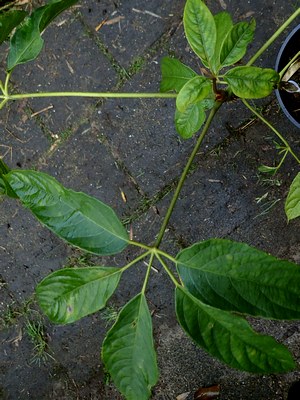
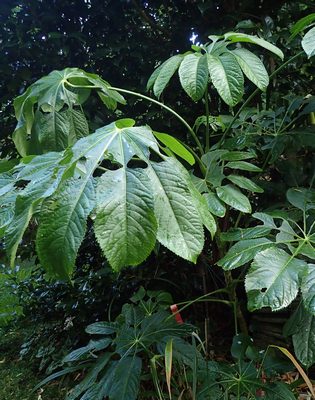
| Brassaiopsis mitis (picture left) with a thick layer of mulch the protected its lower stem and roots. In test outside! Brassaiopsis mitis (picture right) with the beautiful young leaves that are produced till the plants reaches 1 or 2 meters high. This year it is available in 5 liter pots (45 euro) Take care of snails. |
|
 |
.JPG) |
| Brassaiopsis
fatsioides (picture left) New in test Brassaiopsis mitis (picture right) The biggest plant was outside in the winter of 2020/2021 and survived -13°C. With adult leaves. |
|
1.JPG) |
 |
| Brassaiopsis hispida
sp.
Birma. (picture left) A weird, slow growing plant. Hardiness unknown.
Imported as Brassaiopsis dumicola. Brassaiopsis hispida (Remko) Darjeeling |
|
.JPG) |
2.JPG) |
| Brassaiopsis aff. hainla (picture left) Unknown beautiful species
with leaveform like Br. hainla. (Benjamin) Brassaiopsis glomerulata CHB16.CH (Dulong) (picture right) Hardiness unknown. |
|
 |
|
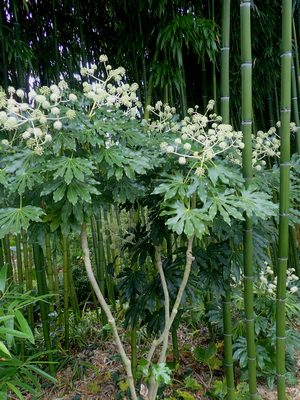
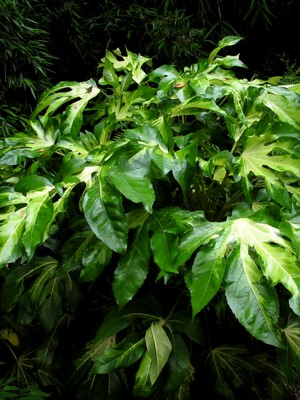
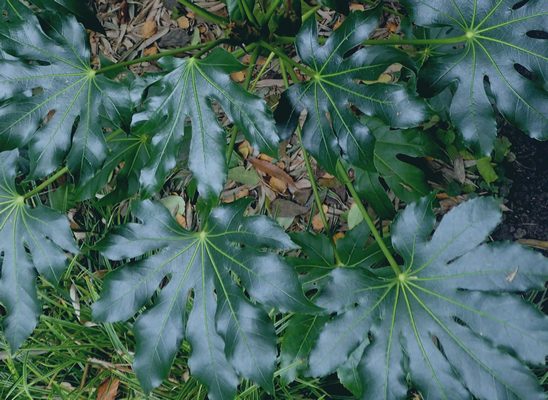
| Fatsia japonica (left and right) The plant left survived -20°C. | |
 |
 |
| Fatsia japonica ‘Murakumo Nishiki’ (picture left) Fatsia japonica ‘Moseri’ (picture right) |
|
 |
|
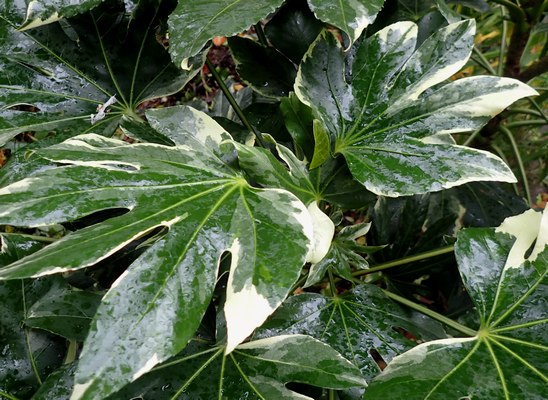
| Fatsia japonica ‘Spiders Web’ at (picture left) Fatsia japonica ‘Variegata’ (picture right) |
|
.JPG) |
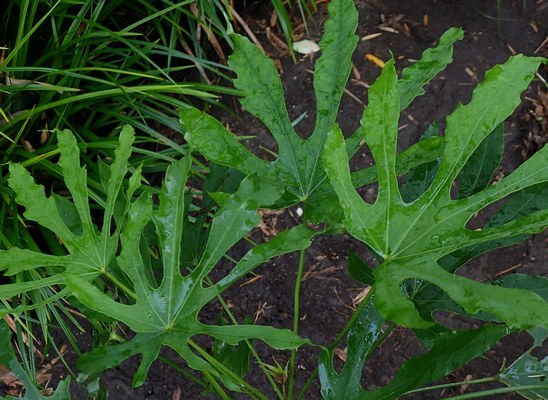 |
| Fatsia polycarpa ‘Deeply Cut’ (picture left) This species should be a bit less hardy than Fatsia japonica. In test outside! Fatsia polycarpa ‘Green fingers’ (picture right) |
|
 |
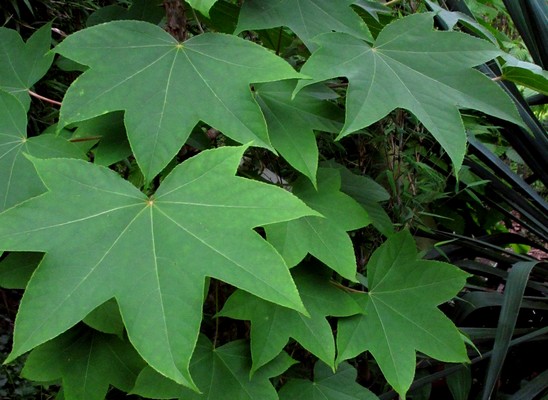 |
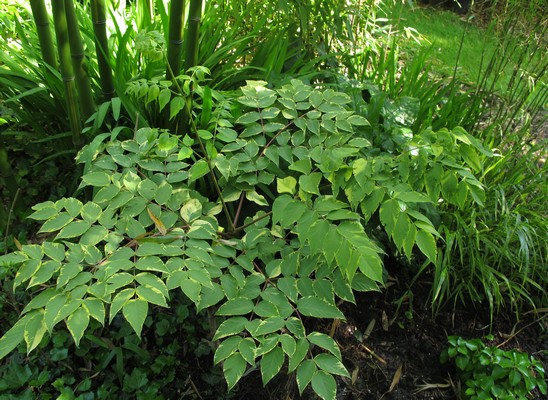
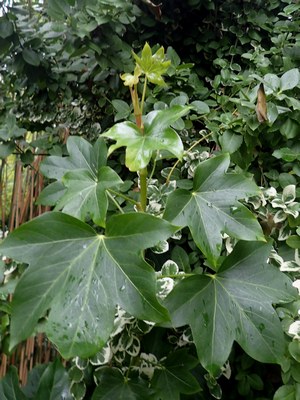
| x Fatshedera lizei (picture left) A hybrid between Hedera and Fatsia japonica. Semi climbing. Reasonable hardy. Available. Kalopanax septemlobus (picture right) This three is hardy. |
|
 |
.JPG) |
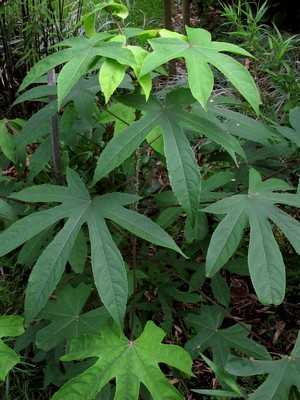
| Kalopanax septemlobus ‘Maximowiczii’ (picture left) has deeply lobbed leaves. Merilliopanax alpinus (picture right) Very interesting big leaved three that could be hardy. In test outside! |
|
.JPG) |
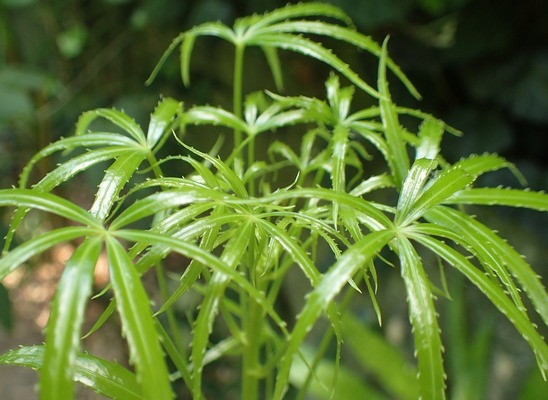 |
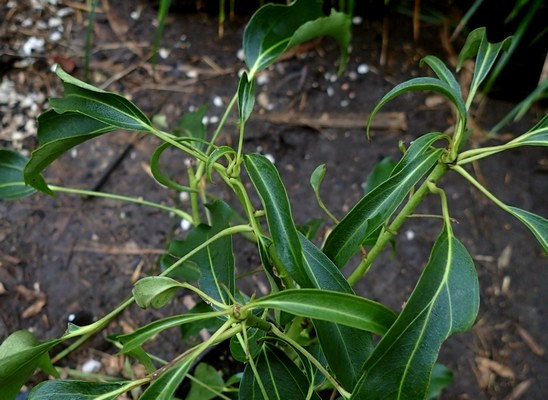
| Merilliopanax alpinus (picture left) With young shoots. Metapanax delavayi (picture right) On a protected spot this beautiful small three can withstand till -18°C. In test outside! |
|
 |
|
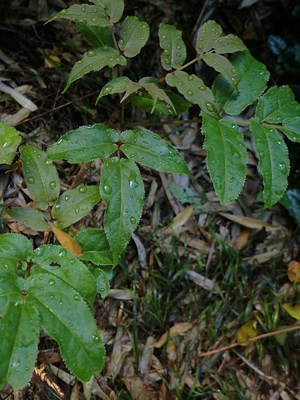
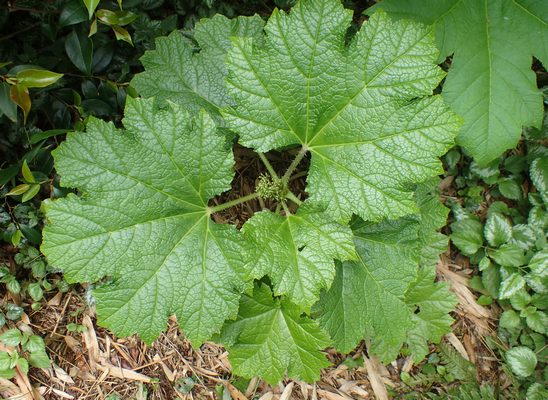
| Metapanax delavayi var. Stout (picture left) With broader leaves. In test outside! Metapanax davidii (picture left) |
|
 |
 |
| Pentapanax ? (picture left) Oplopanax japonicus (picture right) Hardy shrub from Japan. |
|
 |
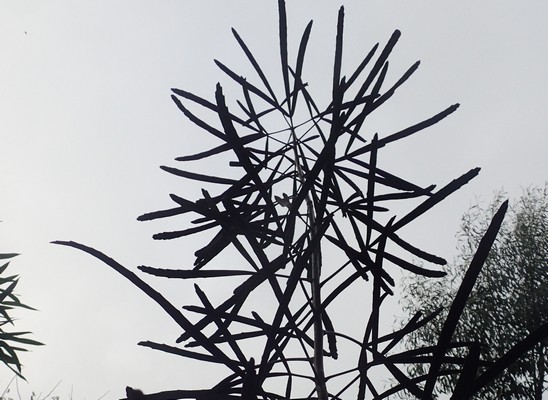 |
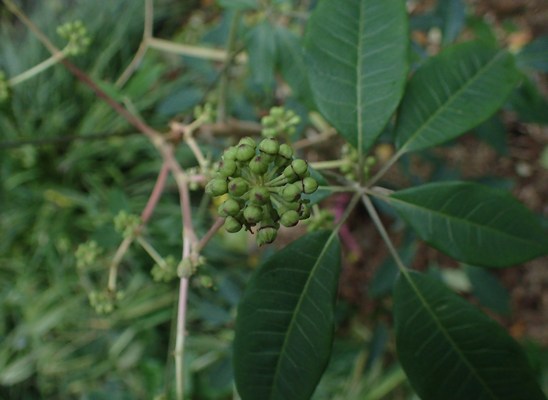
| Oplopanax horridus (picture left) Curious, very hardy shrub of which the small spines are venomous. Take care of snails. Pseudopanax crassifolius f.trifoliatus (picture right) Erect Aralia from New Zealand with stiff, leathery, long leaves that can withstand frost. In test outside! |
|
 |
|
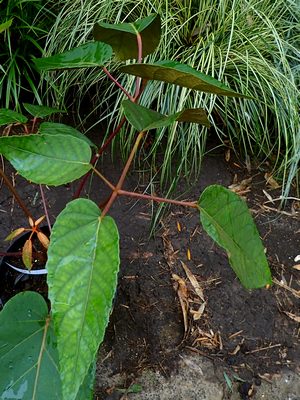
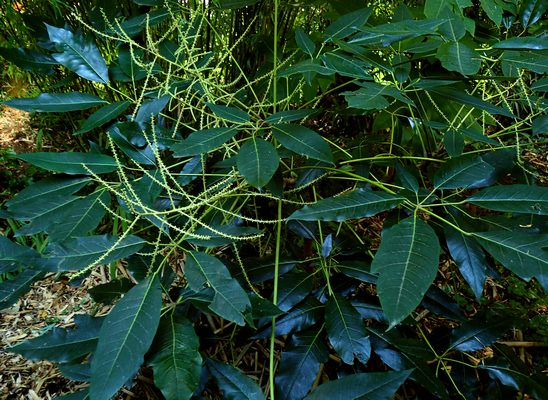
| Schefflera alpinia BSWJ8247 (picture left) This Schefflera from the mountains of North Vietnam is one of the more hardy species. It has leathery leaves. In test outside! Schefflera brevipedicellata (picture right) Small early flowering shrub. In test outside! |
|
 |
 |
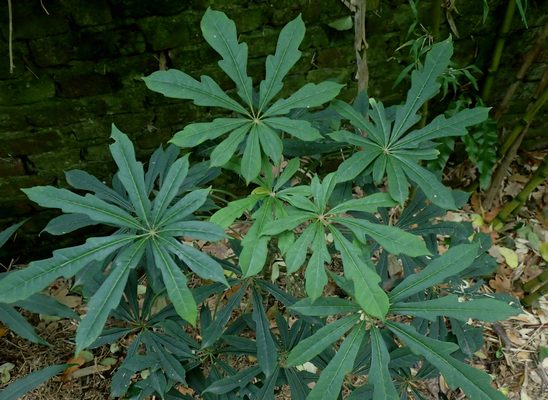
| Schefflera macrophylla (picture left) Schefflera delavayi (picture right) |
|
.JPG) |
 |
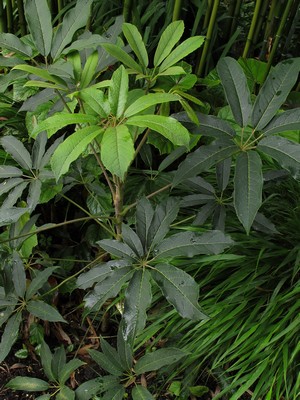
| Schefflera glabrescens (picture left) Seedling of a plant that survived -20°C. In test outside! Schefflera rhododendrifolia (picture right) One of the more hardy species. Take care of snails. In test outside! |
|
 |
.JPG) |
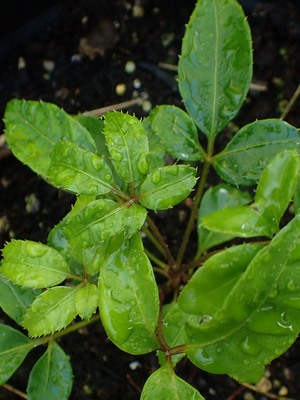
| Schefflera sp. Nova NJM 13.128 (picture left) One of the more hardy species.
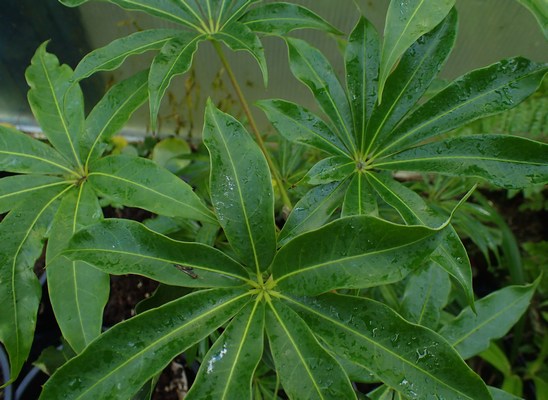
Died ! Who has a plant ? Schefflera taiwaniana (Edward Needham) (picture right) Ornamental species that can withstand frost. In test outside! |
|
 |
 |
| Schefflera seedling Chapana (picture left) Schefflera sweliensis (picture right) Supposed to be a hardier species. |
|
 |
|
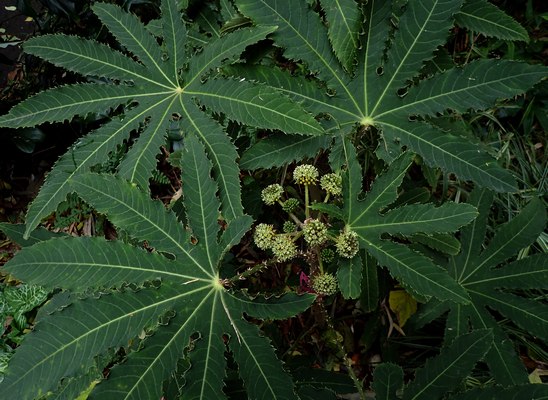
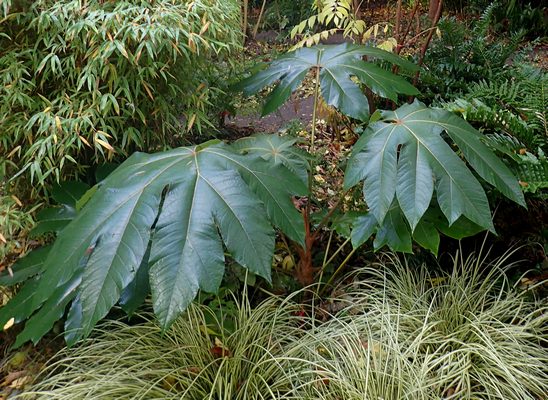
| Tetrapanax papyrifera ‘Steriodal Giant’ (picture left) This small three wit giant leaves has adapted well to our climate, with the help of mild winters. Between -12°C and -15°C it freezes back but usually it comes back from the roots. This form has leaves that are deeper incised than ‘Rex’. It survived 8 not to cold winters outside in a row. Available in 5 liter pots (25 euro) Tetrapanax papyrifera ‘Rex’ (picture right) The big leaves are more round. with the same features as. Available in 5 liter pots (25 euro) |
|